Ordering two ages of the same style—such as an 18-month and a 30-month Parma ham, or a red-seal versus black-seal Ibérico—teaches the palate far faster than scattering across six unrelated countries on one plate.
Flight Tip 01Chapter IV · Spatial & Curatorial Assessment
CHOOSING A TASTING GALLERY
Specialist charcuterie dining spaces operate under different architectural and service constraints than standard bistros. Knowing what to observe inside the room separates theatrical display from rigorous craft preservation.
I. Architecture of the Curing & Service Room
Physical CuesWalk into a dedicated charcuterie gallery in Madrid, Bologna, Lyon, Tokyo, or Singapore and the visual centerpiece is almost always a glass-walled aging or holding cabinet. Well-engineered display vitrines regulate temperature between 10 and 15 °C and maintain relative humidity near 70 to 75 percent while filtering UV light—critical because strong spotlights oxidize exposed fat surfaces within hours, turning sweet ivory lipids dull yellow.
Watch the cutting station closely. True specialist rooms slice to order per ticket rather than pulling pre-portioned trays from under-counter deli drawers. Look for clean, freshly wiped flywheel blades, trimmed outer skin edges on active hams (oxidized outer fat should be pared away before carving guest portions), and dedicated knives separating smoked cuts from unsmoked delicate legs.
Counter seating directly beside the carving bench often provides the most informative dining position: guests can compare muscle cross-sections, observe aroma dispersion as slices fold onto plates, and ask focused questions about maturation dates without interrupting dining-room floor pace.
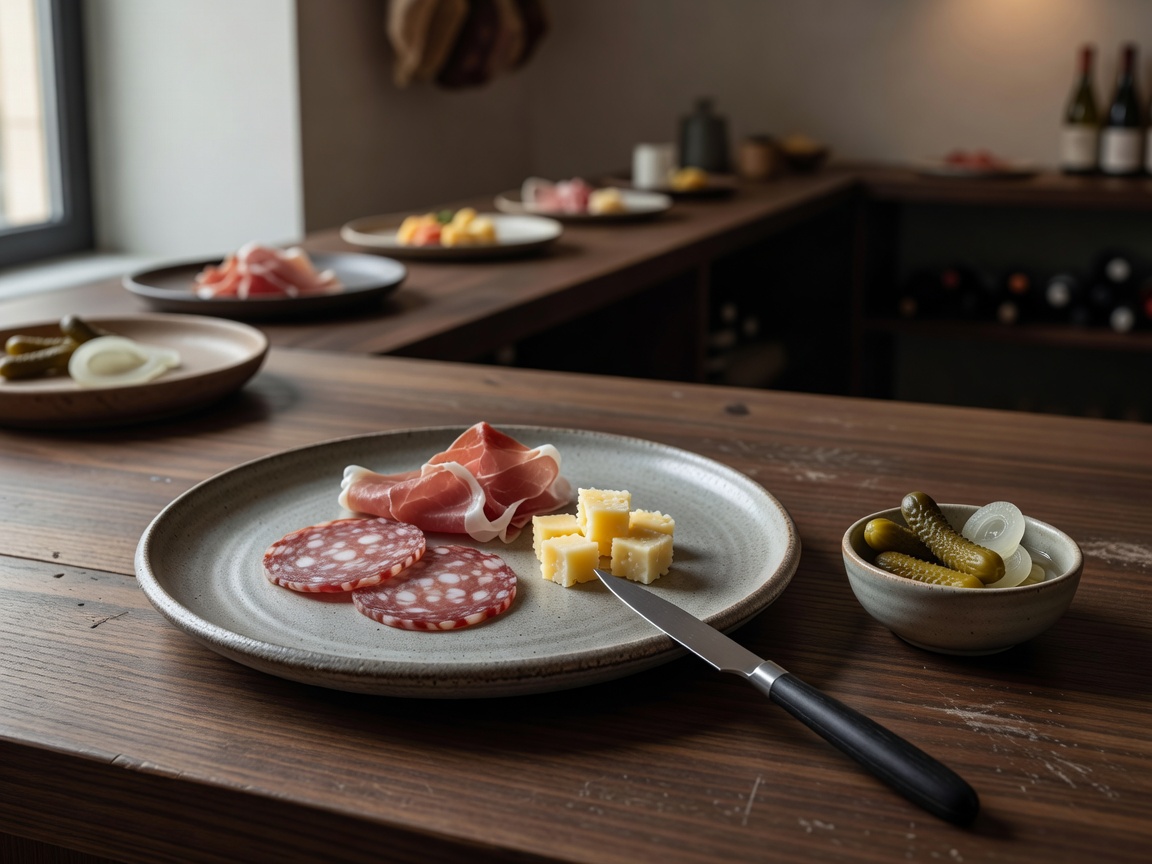
II. Five-Point Gallery Evaluation Matrix
Observer Checklist| Observation Point | Rigorous Gallery Practice | Warning Signal |
|---|---|---|
| Menu Documentation | States anatomical cut, breed or DOP/IGP status, and curing duration in months. | Vague "artisan cured board" phrasing without origin or cut details. |
| Slice Timing | Carved or flywheel-sliced to order minutes before hitting the table. | Dry, curled, darkened slice margins from advance batch slicing. |
| Cabinet Climate | UV-shielded glass, subtle airflow, visible hygrometer readings, clean drip trays. | Warm halogen spotlights baking hanging legs or condensation mist on glass. |
| Fat Conditioning | Oxidized outer rind pared back cleanly; inner fat appears glossy and pearl-white. | Yellowed, waxy perimeter fat left attached to tasting slices. |
| Portion Architecture | Offers half-portions (30–40 g) or numbered tasting flights for solo or comparative study. | Oversized mixed platters where strong spices overwhelm delicate cuts. |
III. Gallery Etiquette & Ordering Strategy
Practical GuidanceIf slices arrive cool from a holding cabinet, let the plate rest briefly at ambient dining temperature before starting; aroma compounds unlock markedly once surface lipids soften.
Flight Tip 02Many outstanding galleries cure whole-muscle salami in-house under municipal food-safety plans while importing leg hams from certified European appellations. Ask directly; clear separation indicates operational integrity.
Flight Tip 03